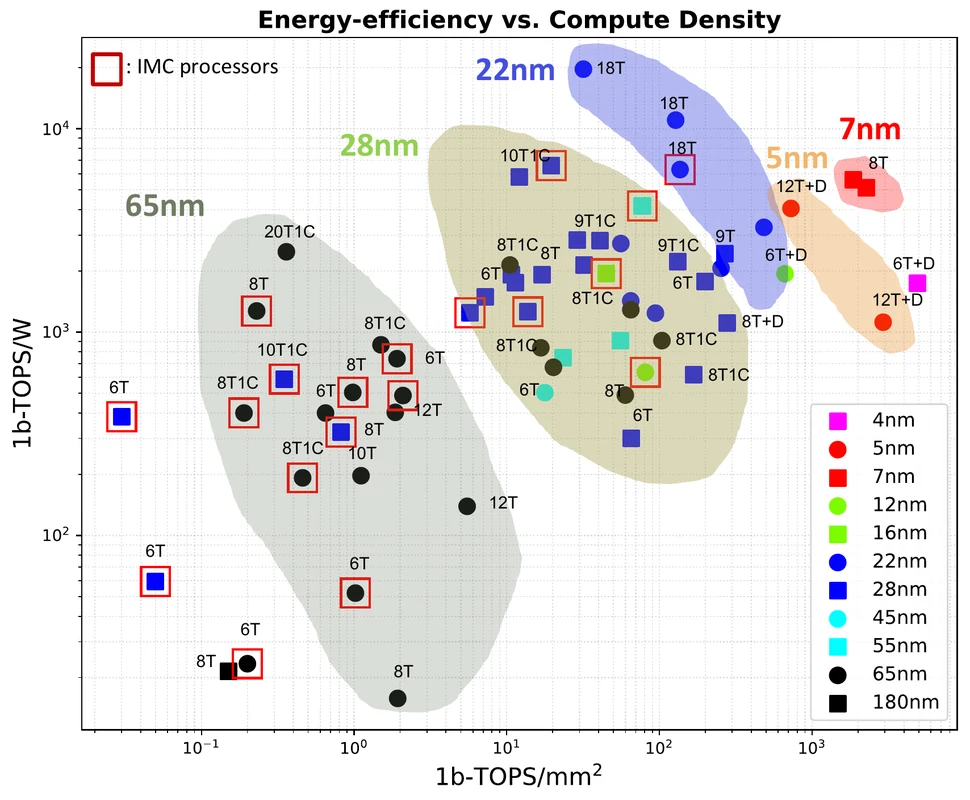
Machine-learning security and integrated-circuit design go hand in hand, from algorithms and computer architecture down to the hardware implementation. Making ML accelerators more energy efficient, for example through in-memory computing (IMC), exposes new attack surfaces. Commercial platforms show the same pattern, where shared resources such as caches and DRAM enable new side-channel and backdoor attacks. Because these vulnerabilities cut across the stack, finding and fixing them calls for algorithm-architecture-circuit co-design, toward secure and efficient ML hardware.
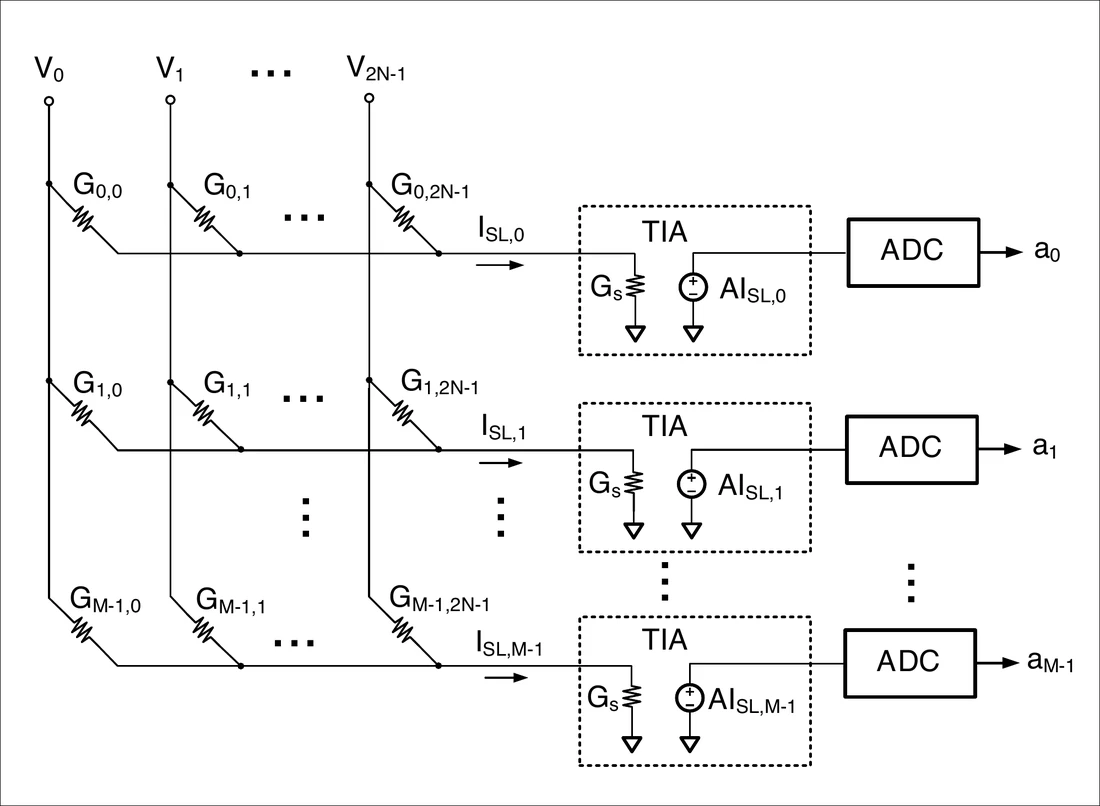
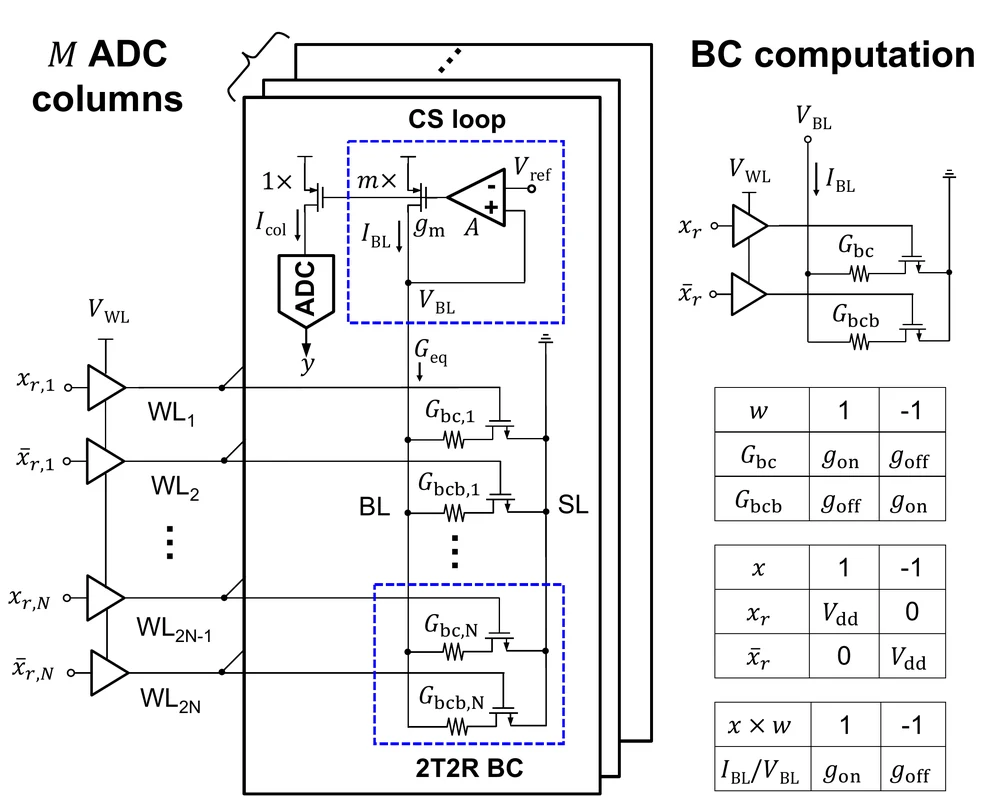
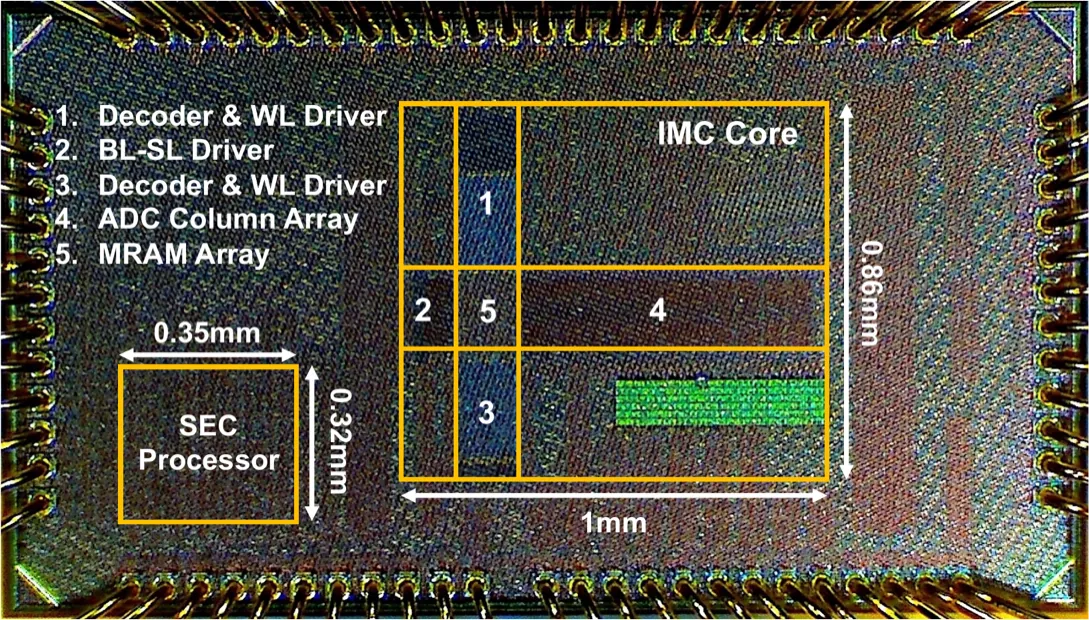
Resistive IMC on embedded non-volatile memory (MRAM, ReRAM, and FeFET) promises large energy savings for machine learning, but analog compute comes with noise. Benchmarking these architectures, modeling their accuracy limits, and building them in silicon reveals how device non-idealities, wire parasitics, sensing mismatch, and ADC precision set the compute SNDR, and how that SNDR trades off against energy, network accuracy, and security.
Energy-accuracy trade-offs in MRAM, ReRAM, and FeFET parallel-bar IMCs, where wire parasitics, conductance variation, and sensing mismatch cap the compute SNDR and the network-level accuracy.
18–22 dBmaximum compute SNDR
≈12conductance contrast beyond which SNDR saturates
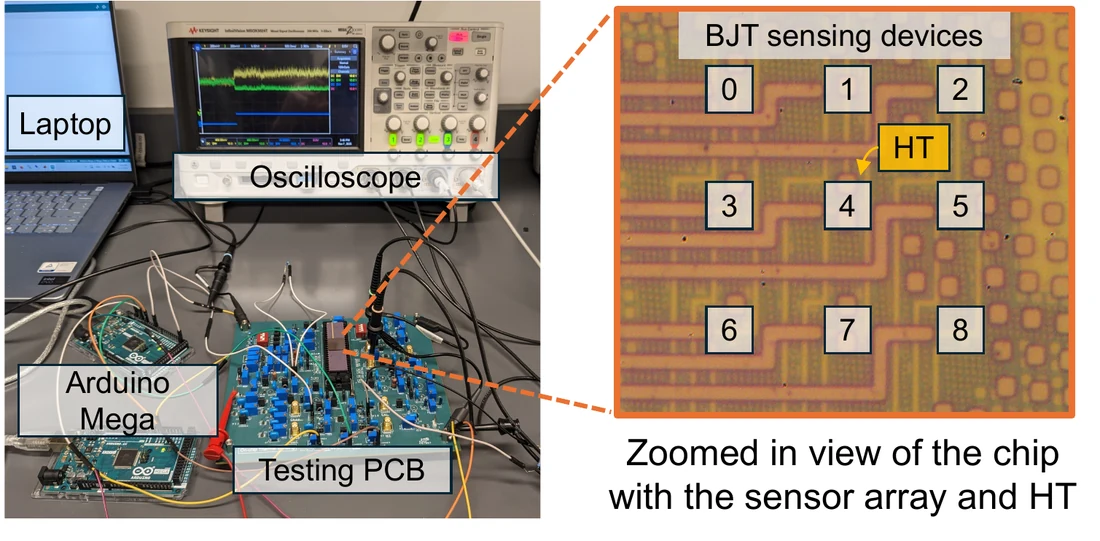
The hardware that runs machine learning can leak what a model computes, or let an attacker change what it does. These confidentiality and integrity attacks, and the defenses against them, range from side channels on consumer hardware and Rowhammer-based backdoors in ML accelerators to model extraction from IMCs and hardware-Trojan detection through on-chip temperature sensing.
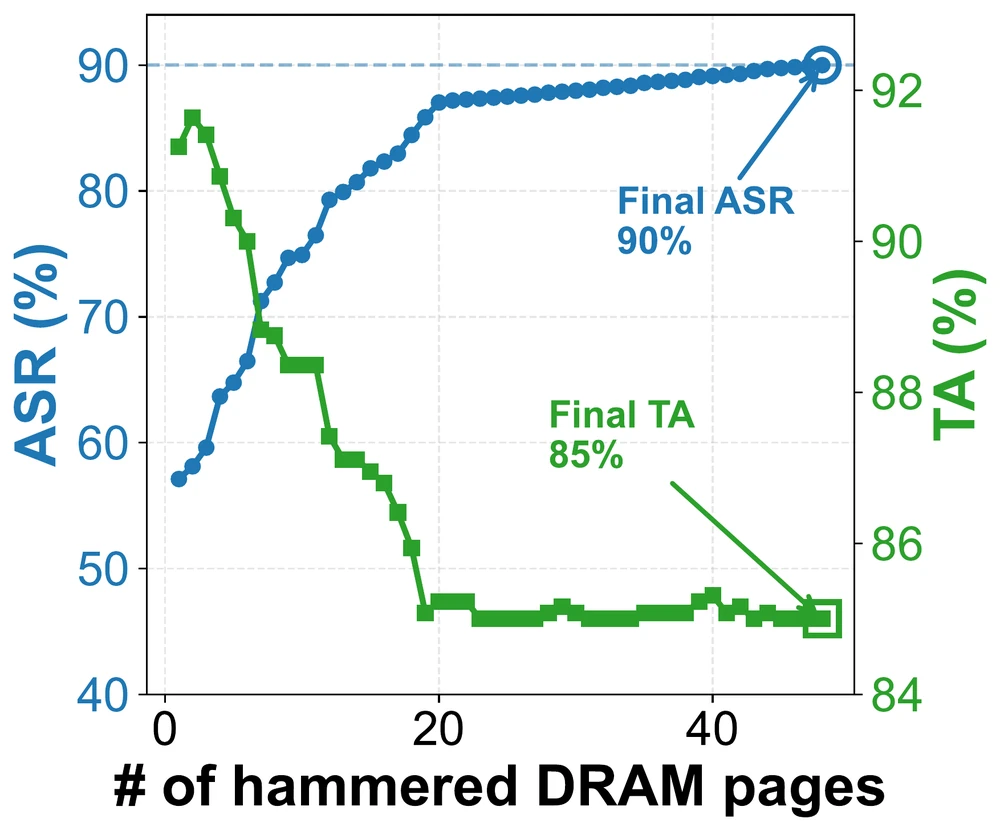
Rowhammer-based backdoor injection during DNN inference through DDR4 DRAM bit flips, with a vulnerability-aware DRAM page allocation that keeps model weights off Rowhammer-prone pages.
≈90%attack success on three DDR4 chips
64–73%fewer pages than Don’t Knock
86% → 91%clean accuracy restored by the page-allocation defense
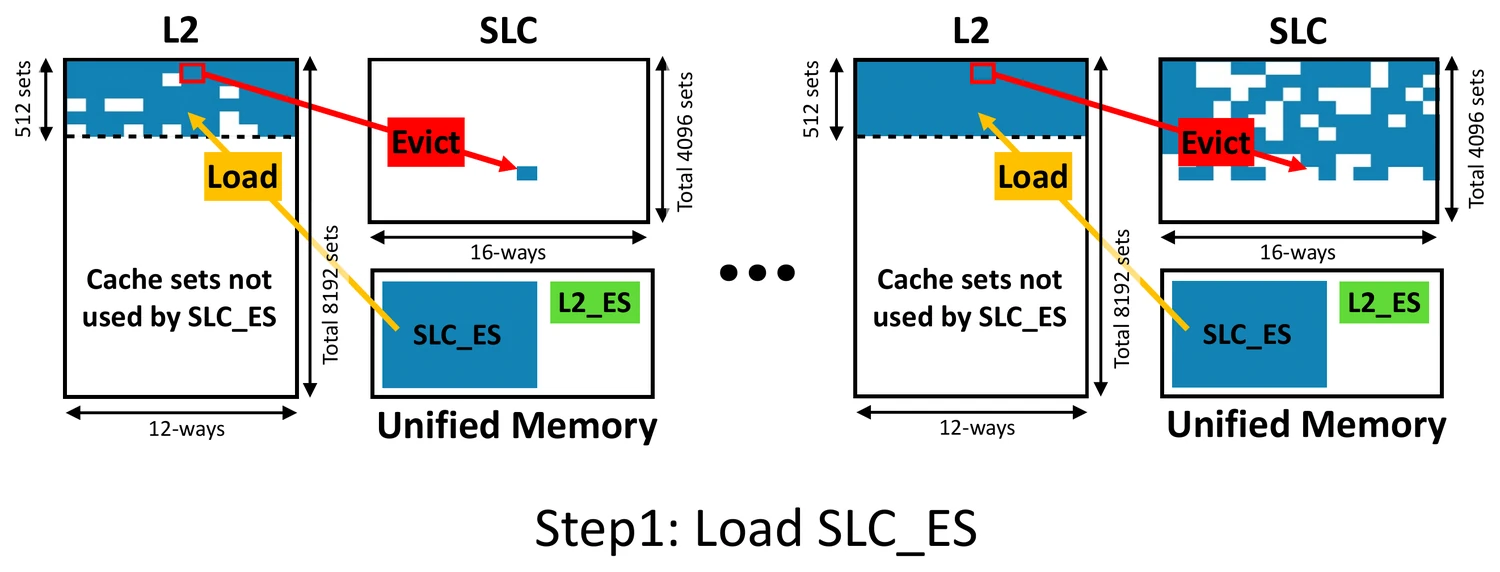
An access-driven CPU-to-GPU Prime+Probe side channel through the shared system-level cache of the Apple M1, built by reverse-engineering its indexing function.
>90%GNN edges recovered
94.8%peak LLM input-keyword recovery from an unprivileged CPU process
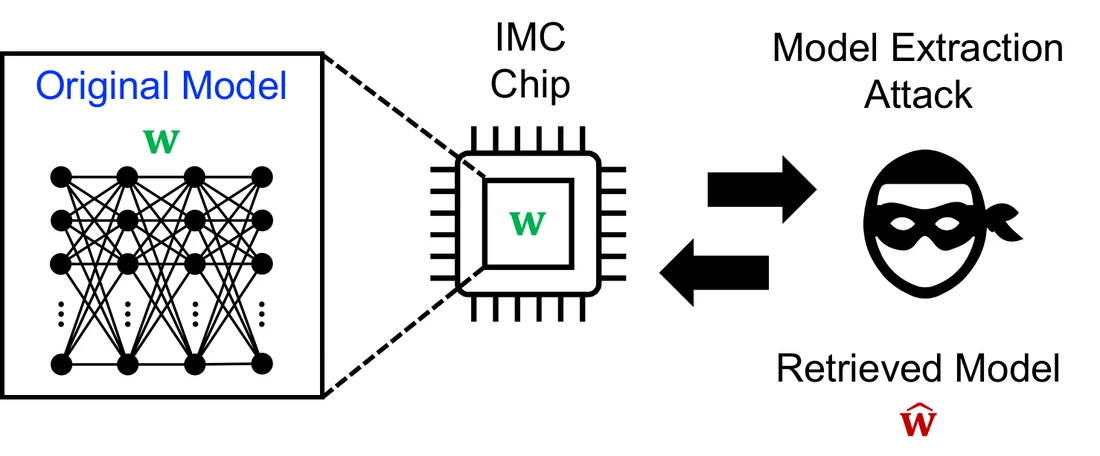
Energy-accuracy-security trade-offs in MRAM, ReRAM, and FeFET IMCs, showing that analog noise lowers compute SNDR but does not protect stored weights from gradient-based model extraction attacks.
0.1%accuracy gap to the fixed-point baseline
4.18 dBlowest SNDR with near-baseline model recovery
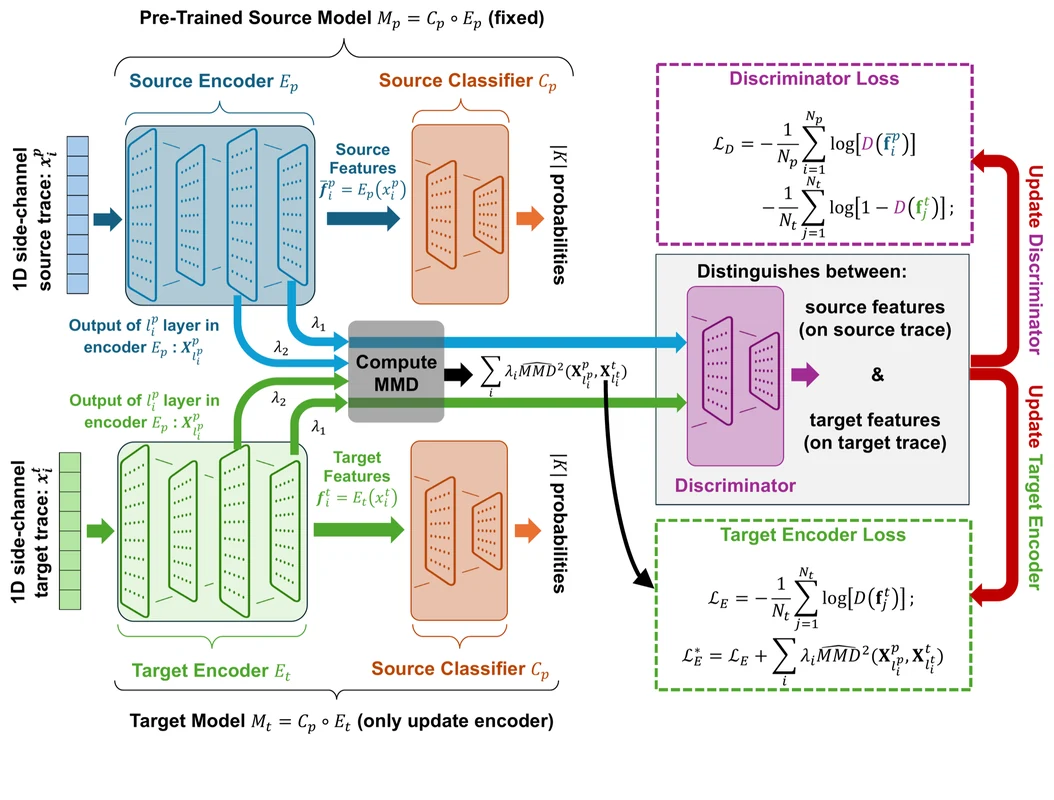
An unsupervised transfer-learning-based side-channel attack (UTLA) that recovers cryptographic keys across FPGA, microcontroller, and x86 targets and across leakage modalities.